Q
What parameters can be customized in a custom LiFePO4 battery pack?
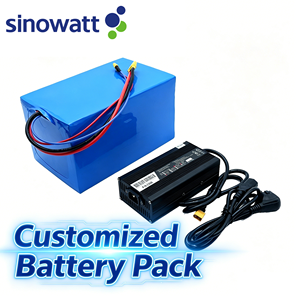
Our engineering team offers full end-to-end customization, including: nominal voltage (12V up to 800V high-voltage systems), amp-hour capacity, cell selection (prismatic vs. cylindrical vs. pouch), physical enclosure dimensions and IP ratings (IP54 to IP68 stainless steel/aluminum), custom smart BMS firmware, communication protocols (CANbus, RS485, SMBus), wire harness connectors, integrated heating pads for sub-zero operation, and custom branding/labeling.
Q
How do you verify cell quality and ensure only Grade-A LFP cells are used?
We enforce a strict 4-step quality control process. First, we source directly from manufacturer factories with full QR code traceability. Second, incoming cells undergo automated testing for internal resistance (AC IR & DC IR), open-circuit voltage (OCV), and rated capacity. Third, cells are batch-sorted into micro-tolerance groups (±0.05V, ±1mΩ) prior to pack welding. Finally, completed packs undergo 100% full-cycle burn-in load testing.
Q
What safety certifications are required for international shipment of custom lithium packs?
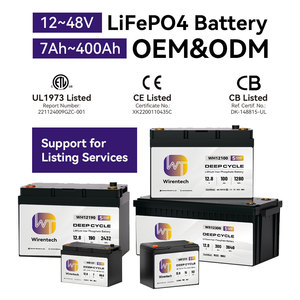
For air, ocean, or ground freight, custom lithium battery packs must pass UN 38.3 testing (which includes altitude simulation, thermal test, vibration, shock, external short circuit, impact, overcharge, and forced discharge). For end-equipment compliance, we provide design consultation and testing support for IEC 62133, UL 1973, UL 2580, CE, and ATEX/HAZLOC explosive atmosphere standards.
Q
What is the typical Minimum Order Quantity (MOQ) and sample prototyping lead time?
For engineering prototypes and proof-of-concept custom designs, our MOQ starts at just 1 to 5 units depending on system complexity. Engineering design approval and rapid sample production typically take 2 to 4 weeks. Mass production manufacturing cycles range from 4 to 6 weeks after sample sign-off.
Q
How does low temperature affect LiFePO4 battery performance and how is it mitigated?
Standard LiFePO4 cells experience elevated internal resistance below 0°C, rendering direct charging unviable due to risk of lithium plating. To solve this for cold-climate applications, we engineer internal automated PTC heating film circuits into the pack structure. The BMS activates the heating element using incoming charger power until internal cell temperatures reach +5°C, ensuring safe, continuous fast charging down to -30°C.