1. Architectural Evolution of Commercial & Industrial (C&I) Solar Battery Banks
The global transition toward decentralized renewable grids has elevated Commercial & Industrial (C&I) solar battery storage from an auxiliary power backup option into a mission-critical financial asset. As enterprises face accelerating electricity tariffs, stringent carbon compliance mandates, and grid volatility, selecting a premier China Commercial Solar Battery Banks Manufacturer becomes a core strategic decision for procurement directors and EPC engineers.
Modern commercial battery storage systems (BESS) are engineered to resolve complex energy challenges: peak shaving, demand charge management, solar self-consumption optimization, microgrid stabilization, and instantaneous uninterruptible power supply (UPS) transition. China’s advanced battery manufacturing ecosystem leads global production by combining cost efficiency with state-of-the-art Lithium Iron Phosphate (LiFePO4 / LFP) chemistry, automated cell sorting, and AI-assisted Battery Management Systems (BMS).
Key Information Gain Insight: Chemistry Selection for Commercial Storage
While nickel-manganese-cobalt (NMC) chemistries dominated early electric vehicle deployments, LiFePO4 (LFP) prismatic cells have achieved absolute supremacy in commercial solar energy storage. LFP offers superior thermal runaway resistance (decompensation threshold above 270°C compared to NMC's 210°C), zero cobalt sourcing risks, and an extraordinary cycle lifespan exceeding 6,000 to 10,000 cycles under controlled thermal management.
Peak Shaving & Tariff Optimization
Automated discharge during peak tariff hours lowers monthly demand charges by up to 40%, ensuring rapid capital payback for industrial enterprises.
Thermal & Safety Layering
Multi-stage liquid cooling architecture maintains intra-pack delta temperature below 2.5°C, preventing localized thermal stress and degradation.
Smart BMS & Protocol Integration
Native RS485, CAN-bus, and Modbus TCP/IP protocols allow seamless interoperability with Tier-1 commercial hybrid inverters (SMA, Victron, Deye, Sungrow).
2. Future Procurement Trends for Commercial Solar Battery Banks (2025–2030)
To maintain long-term competitive advantage, engineering buyers must align procurement specifications with upcoming technological and regulatory shifts across the global energy storage landscape:
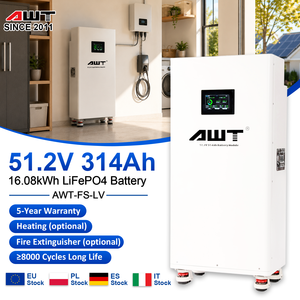
Trend 1: Transition to High-Capacity 314Ah & 560Ah Prismatic Cells
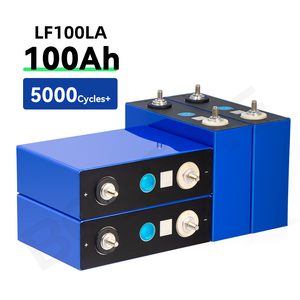
The industry is rapidly shifting away from standard 50Ah and 100Ah pouch or cylindrical cells toward ultra-high-density 314Ah prismatic LFP cells. Higher single-cell capacities reduce the total number of internal busbar connections and solder joints by over 45%, significantly lowering internal resistance ($R_{int}$), heat dissipation overhead, and point-of-failure probability.
Trend 2: Adoption of 1500V High-Voltage Architecture
Utility-scale and large commercial installations are migrating from traditional 600V/1000V DC bus architectures to 1500V DC system voltages. Increasing DC line voltage reduces system current for equivalent power output, enabling smaller cable cross-sections, lowering copper consumption, reducing line losses by up to 30%, and enhancing inverter conversion efficiency to over 98.8%.
Trend 3: Liquid Cooling Replacing Air Cooling in C&I Enclosures
While forced-air cooling remains common in low-capacity indoor systems, high-power commercial storage units (100kWh to 2MWh+) are standardizing on closed-loop liquid cooling plates. Liquid cooling achieves 80% higher heat transfer coefficients, maintains uniform cell-to-cell temperatures, consumes 30% less auxiliary parasitic power, and extends overall battery bank operating lifespan by 3 to 5 years.
Trend 4: Stringent Safety Certification & UL 9540A Thermal Runaway Compliance
International regulatory authorities (North American NEC, European CE/IEC, Australian CEC) strictly enforce fire safety standards. Leading Chinese manufacturers now design battery modules from the ground up to pass UL 9540A unit-level and fire-propagation testing, featuring integrated aerosol or localized Novec 1230 fire suppression systems directly inside each battery rack.
3. Technical Comparison: Commercial Battery Architecture Specs
When evaluating China commercial solar battery bank suppliers, comparing architectural paradigms ensures your project matches operational requirements:
| Technical Parameter |
Standard Commercial Rack |
High-Density 314Ah Container |
Modular Outdoor All-In-One |
| Nominal System Voltage |
48V / 51.2V / 102.4V DC |
768V – 1500V DC |
400V / 800V DC |
| Cell Chemistry & Form |
Grade A LFP Prismatic 100Ah/200Ah |
Grade A LFP Prismatic 314Ah/560Ah |
Grade A LFP Prismatic 280Ah |
| Thermal Management |
Forced Air Cooling / HVAC |
Precision Liquid Cooling Plate |
Integrated HVAC Liquid Loop |
| Expected Cycle Lifespan |
≥6,000 Cycles @ 80% DOD |
≥8,000 to 10,000 Cycles |
≥6,500 Cycles @ 80% DOD |
| Round-Trip Efficiency (RTE) |
94.5% – 96.0% |
97.5% – 98.5% |
96.5% – 97.8% |
| Protection Level |
IP20 / IP54 Indoor Cabinet |
IP55 / IP65 Outdoor Container |
IP65 Weatherproof Modular Enclosure |
| Compliance & Certs |
CE, UN38.3, IEC 62619 |
UL 1973, UL 9540A, IEC 62619 |
CE, UL 9540, UN38.3, MSDS |
4. Technology Development Roadmap & Engineering Innovations
As a senior engineering partner, our manufacturing philosophy leverages cutting-edge manufacturing processes to solve real-world industrial energy storage pain points:
Automated Laser Welding & Cell Sorting Pipelines
Inconsistent cell internal resistance ($R_{int}$) and capacity divergence are the primary causes of premature battery pack capacity fading. Our production line utilizes 100% automated optical inspection (AOI), 4-variable impedance sorting (Voltage, $R_{int}$, Capacity, Self-discharge rate), and high-precision fiber laser busbar welding. This guarantees cell pairing variance below $\pm 2\text{mV}$, preventing localized cell overcharging or undercharging.
Three-Tier Smart Battery Management System (BMS) Architecture
Our commercial battery banks incorporate a hierarchical 3-tier BMS topology:
- BMU (Battery Module Unit): Directly monitors individual cell voltages and surface temperatures; performs active cell balancing up to 5A.
- BCU (Battery Cluster Unit): Aggregates string voltages, manages high-voltage contactors, and calculates state of charge (SOC) and state of health (SOH) using extended Kalman filter algorithms.
- BAMS (Battery Array Management System): Interfaces directly with plant SCADA systems, offering cloud-connected predictive analytics, remote firmware updates, and automated thermal throttling.
5. Enterprise Background & Manufacturing Superiority
Building on over 40 years of combined engineering excellence in high-reliability battery design and ISO 9001 certified manufacturing, our production footprint provides unmatched reliability for international B2B buyers:
Why Global OEMs and EPCs Partner With Us
100% Tier-1 Audited Cell Sourcing: We partner directly with world-class cell manufacturers (CATL, EVE, Saft, Tadiran, Murata, Panasonic), ensuring every cell is factory-fresh, Grade-A, and fully traceable with original factory QR codes.
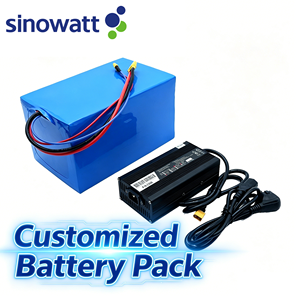
Custom OEM/ODM Engineering: From customized mechanical enclosures and custom voltage strings (12V to 1500V) to specialized hazardous location (HAZLOC/ATEX) certifications, our engineering team works alongside your designers from prototype to full-scale manufacturing.
Resilient Global Supply Chain: With strategic warehousing across North America, Europe, and Asia, we provide duty-paid (DDP) delivery options, mitigating supply disruptions and optimizing freight costs for your projects.