
Industrial Backup Architecture: The Technical Imperative of CE Certified UPS Battery Manufacturing
In modern enterprise infrastructure—ranging from hyper-scale data centers and semiconductor cleanrooms to critical healthcare operating theaters and off-shore oil & gas instrumentation—power resilience is no longer evaluated merely by run-time capacity. It is defined by total system reliability, electro-chemical safety, electromagnetic compatibility (EMC), and zero-latency energy transition. As leading CE Certified UPS Backup Battery Systems Manufacturers, we engineer custom energy storage modules designed to satisfy the rigorous European Economic Area (EEA) safety mandates while maximizing power density and volumetric efficiency.
The European Conformity (CE) mark for Uninterruptible Power Supply (UPS) batteries encompasses compliance with strict harmonized European Standards. Specifically, our backup systems adhere to EN IEC 62040-1:2019 for general and safety requirements for UPS in operator access areas, EN 62040-2:2018 for Electromagnetic Compatibility (EMC) requirements (Category C1–C3), and EN IEC 62619:2022 governing secondary lithium cells and batteries used in industrial stationary applications. Achieving true CE compliance requires full thermal safety validation, short-circuit protection testing, overcharge isolation, and structural crashworthiness under extreme thermal shock environments (-30°C to +65°C).
Low Voltage Directive (LVD 2014/35/EU)
Guarantees complete electrical safety for high-voltage DC bus systems (up to 1000V DC). Includes rigorous creepage/clearance distance verification, dielectric strength testing up to 3750V AC, and robust double-insulation containment barriers.
EMC Directive (2014/30/EU) Compliance
Prevents high-frequency switching noise, electro-magnetic interference (EMI), and harmonic distortion generated by high-power inverter circuits from disturbing surrounding industrial sensors, communication lines, or IT servers.
Thermal Runaway Propagation Prevention
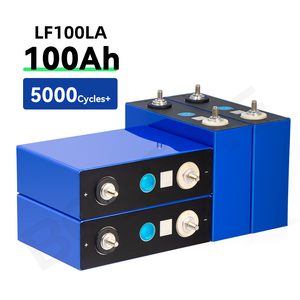
Designed to UN 38.3 and UL 1973 criteria, utilizing ceramic-coated mica insulators and aerogel barrier shields between individual 3.2V 100Ah/280Ah/314Ah cells to guarantee zero single-cell thermal propagation.
Chemistries & Topologies Matrix: LiFePO4 vs. VRLA Lead-Acid vs. NMC in Enterprise UPS Systems
To provide actionable insights for technical procurement directors, electrical consulting engineers, and system integrators, the following engineering matrix contrasts the critical performance indices of traditional Valve-Regulated Lead-Acid (VRLA) batteries against advanced Lithium Iron Phosphate (LiFePO4) prismatic configurations manufactured by our facility.
| Performance Metrics | Legacy VRLA Lead-Acid | High-Rate NMC Lithium | Prismatic LiFePO4 (Excell Standard) |
|---|---|---|---|
| Cycle Life (80% DOD @ 25°C) | 200 – 500 Cycles | 1,200 – 2,000 Cycles | 5,000 – 8,000 Cycles |
| Gravimetric Energy Density | 35 – 45 Wh/kg | 200 – 250 Wh/kg | 160 – 180 Wh/kg |
| Thermal Runaway Temperature | N/A (Gassing @ >60°C) | ~210°C (Exothermic Excursion) | >270°C (Extremely Stable) |
| Discharge Efficiency (1C to 3C) | 60% – 75% (Peukert Effect Loss) | 92% – 95% | 98.5% (Flat Voltage Plateau) |
| 10-Year TCO Index | Baseline (High Replacement Cost) | -25% Total Spend | -58% Lower Maintenance & Power Cost |
| Footprint & Weight Reduction | Heavy / Large Space Required | 75% Mass / 60% Vol Reduction | 65% Mass / 50% Vol Reduction |
Future Procurement Trends & Technological Evolution in Industrial UPS Systems (2025–2030)
As enterprise energy demand expands alongside AI computing workloads, grid fragility, and carbon-neutral mandates, procuring managers must look beyond short-term equipment acquisition costs. The market for industrial UPS battery backup systems is undergoing four major structural evolutions:
1. Transition from Low-Voltage Parallel Banks to High-Voltage (HV) DC Bus Architectures
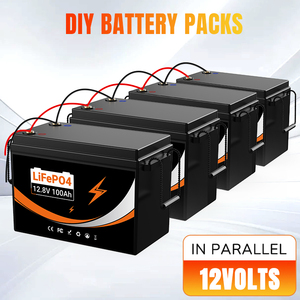
Traditional 12V and 48V parallel setups suffer from substantial copper cable losses ($I^2R$) and complex current-balancing challenges when scaling up to hundreds of kilowatts. Modern enterprise procurement is rapidly favoring high-voltage series battery systems ranging from 192V DC, 384V DC to 768V DC. High-voltage architectures allow direct integration into high-efficiency double-conversion UPS topology inverters, cutting system current draw, reducing conductor cross-sectional area by up to 60%, and enhancing system round-trip efficiency (RTE) to over 97.5%.
2. AI-Integrated Active Balancing BMS & Cloud Telemetry
Passive resistor-bleeding BMS systems are obsolete for critical applications. Future-proof procurement requires intelligent, digital-twin-enabled Battery Management Systems featuring active transformer-based charge redistribution. Our custom BMS solutions monitor individual cell internal resistance ($R_{int}$), state-of-charge (SoC), state-of-health (SoH), and voltage delta down to $\pm 1\text{mV}$. Integrated CAN 2.0B, RS485, Modbus-RTU, and Ethernet SNMP communications stream real-time telemetry into enterprise SCADA and automated cloud maintenance portals, enabling predictive fault isolation 48 hours prior to thermal anomalies.
3. Bidirectional Energy Flow & Virtual Power Plant (VPP) Grid Interactivity
UPS systems are transforming from passive emergency-only insurance assets into active revenue-generating energy nodes. Through advanced bidirectional inverter interface design, enterprise backup batteries participate in Peak Shaving, Demand Response, and Frequency Regulation (FFR) markets. Facilities draw power from the grid during off-peak rate structures and discharge surplus stored energy back into the facility or grid during demand surges, without compromising minimum emergency operational capacity reserves.
4. Eco-Design Directives, Carbon Traceability & Battery Passport Compliance
With the implementation of EU Battery Regulation 2023/1542, global procurement mandates complete carbon footprint documentation, ethically sourced raw material verification (cobalt-free chemistry preference), and recycling passports. Our prismatic LiFePO4 cells use 100% recyclable aluminum casing, zero cobalt or nickel, and are engineered to allow second-life repurposed stationary storage before final hydrometallurgical elemental recovery.
Require Custom Voltage, Rackmount, or Cabinet Enclosure Engineering?
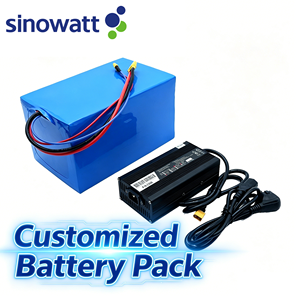
Our senior electro-chemical engineers design customized lithium backup modules tailored precisely to your legacy UPS inverter protocols, space constraints, and environmental requirements.
Get a QuoteWhy Global OEM Integrators Choose Our Manufacturing Engineering
Backing critical infrastructure demands an established engineering legacy. Building upon over 40 years of pioneering battery design and manufacturing expertise—originally developed across rigorous aerospace, sub-sea oil & gas instrumentation, and medical sectors—our facility delivers uncompromised reliability across four core operational pillars:
- ISO 9001:2015 & ISO 13485 Certified Manufacturing: All manufacturing plants operate under total quality management (TQM) protocols with automated optical inspection (AOI), ultrasonic wire bonding, automated laser welding, and 100% end-of-line (EOL) burn-in testing.
- Partnership with World-Class Cell Providers: We exclusively utilize Grade A, factory-audited prismatic cells from top-tier cell manufacturers (including Tadiran, Saft, Panasonic, Murata, Molicel, Samsung SDI, LG Energy Solution, and Lishen), ensuring strict internal impedance matching within $\le 0.5\text{m}\Omega$.
- Full-Cycle Engineering & Custom BMS Development: From concept design to enclosure thermal fluid dynamics modeling, firmware customization, and safety compliance testing—our in-house engineering team manages every phase without third-party outsourcing dependencies.
- Global Supply Chain Resilience & EU/DE Duty-Free Warehousing: Maintained inventory warehouses across Europe (DE stock) and North America facilitate rapid deployment, avoiding long maritime shipping lead times and tariff bottlenecks for urgent enterprise turnarounds.
Procurement FAQ: Technical & Operational Inquiries
Direct answers to standard technical questions submitted by utility engineers, procurement specialists, and system designers.
Partner with an ISO 9001 Certified Lithium Battery Manufacturer
Whether you require standard 48V/51.2V rackmount backup modules, high-capacity 100kWh–500kWh energy storage containers, or custom CE-compliant battery systems built to your precise specification—our electro-chemical engineers are standing by.