CE Certified High Energy Density Battery Packs Manufacturer & Supplier

Precision Engineering Whitepaper & Global OEM Procurement Guide: Custom LiFePO4 & Li-ion Storage Systems for Industrial, Energy Storage, Marine & Extreme Environment Applications.

CE / IEC 62619 Certified ISO 9001:2015 Audited 5000+ Deep Cycle Lifespan Custom BMS Integration
High Energy Density Product Line

Featured Industrial & Residential Battery Pack Solutions

Explore our CE-certified, high-energy-density prismatic and custom cylindrical battery modules engineered with Tier-1 Grade-A cell chemistry for maximum safety, thermal stability, and prolonged lifecycle.

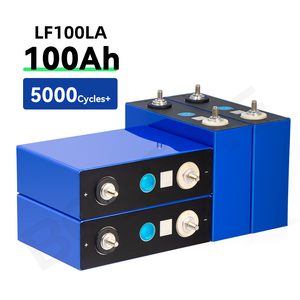
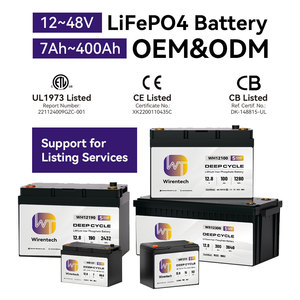
CE Certified Grade A 5000 Cycles 3.2V 100Ah LFP Prismatic Cells Lithium Battery

Grade A 5000 Cycles 3.2V 100Ah LFP Prismatic Cells LiFePO4 Pack

  • Nominal Voltage: 3.2V / 12V / 24V / 48V
  • Cycle Life: ≥5000 Cycles @ 80% DOD
  • Chemistry: Lithium Iron Phosphate (LiFePO4)
  • Application: RVs, Campers, Off-Grid Solar
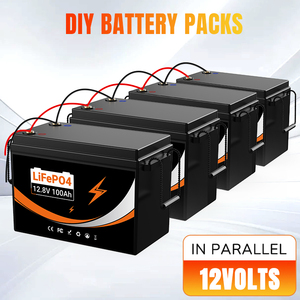
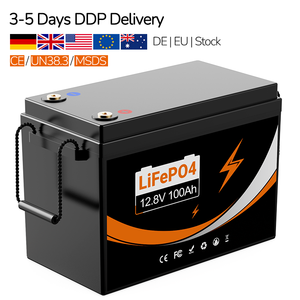
EU Stock EU Stock 12v 24v 100ah 200ah 300ah Lifepo4 Iron Phosphate Battery

EU Stock 12V 24V 100Ah-300Ah LiFePO4 Battery Pack (100 kWh Ready)

  • Capacity Range: 100Ah to 300Ah Modular
  • Duty Cycle: Deep Cycle High Rate Discharge
  • Safety: Integrated BMS with Overcharge Protection
  • Stock Location: Duty-Free EU Warehouse
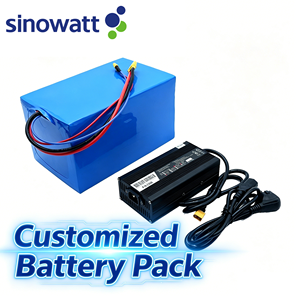
Custom OEM Customized Battery Pack with BMS Li-ion LiFePO4 Industrial Solution

Customized Industrial BMS Li-ion/LiFePO4 Pack (10S1P 7S2P 3S10P)

  • Configuration: Custom Series/Parallel Wiring
  • BMS Protocol: CANbus / RS485 / SMBus
  • Enclosure: IP67 Heavy-Duty Industrial Casing
  • Application: Robotics, Medical & Defense
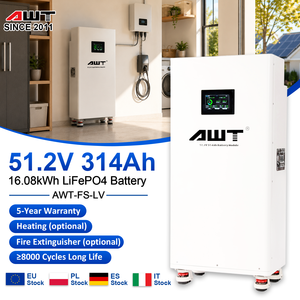
Solar ESS EU Stock Solar Energy System Lithium Ion Batteries Pack 15Kwh 48V

Solar Energy Storage Pack 15kWh-16kWh 48V/51.2V 280Ah-314Ah

  • Energy Capacity: 15 kWh / 16 kWh Scalable
  • Cell Type: Grade-A 314Ah Prismatic Cell
  • Compatibility: Inverter Auto-Matching
  • Compliance: CE, UN38.3, IEC62619
Marine Grade Customized 12V 24V 36V 48V Rechargeable Lifepo4 Solar Storage Battery

Customized 12V-48V Rechargeable LiFePO4 Marine & Golf Cart Pack

  • Voltage Options: 12V / 24V / 36V / 48V
  • Capacity: 50Ah, 100Ah, 200Ah, 300Ah
  • Protection: Anti-Vibration & Waterproof
  • Application: Marine Trolling, RV, Utility Carts
DE Duty-Free EU DE Stock NO TAX 12V 24V Lithium Phosphate Battery Pack

EU/DE Stock 12V/24V 100Ah 200Ah 300Ah Home Energy Storage Pack

  • Tax Exemption: Tax-Free Direct EU Shipment
  • Safety Features: Active Balance BMS System
  • Operation Temp: -20°C to +60°C Operating
  • Warranty: 5-Year Factory Warranty
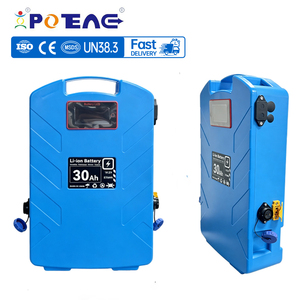
Portable High-Density High Capacity 19.2V 30Ah Lithium LiFePO4 Backpack Battery Pack

High Capacity 19.2V 30Ah LiFePO4 Backpack Portable Power Pack

  • Form Factor: Wearable Ergonomic Backpack
  • Gravimetric Density: >180 Wh/kg
  • Outlets: Multi-Voltage DC & USB Outputs
  • Application: Outdoor Exploration, Field Robotics
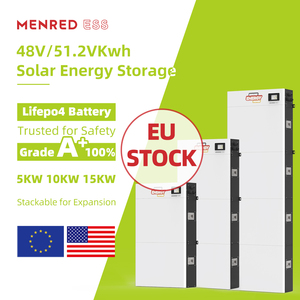
Stacked ESS 5kw 10kw 20kw 30kw 50kw Lifepo4 Whole House Battery Stacked Backup

5kW-50kW Stacked Modular Whole-House Microgrid LiFePO4 System

  • Power Range: 5kW, 10kW, 20kW up to 50kW
  • Architecture: Wireless Plug-and-Play Stacking
  • Backup Switching: <10ms Seamless UPS Switching
  • Smart App: Remote Monitoring via Cloud/WiFi
Industry Whitepaper Analysis

Engineering Next-Generation High Energy Density Battery Packs: Principles & Standards

As global decarbonization accelerates and industrial electrification penetrates mission-critical sectors, the market demand for CE-certified high energy density battery packs has evolved from simple power delivery to complex electro-chemical engineering. Achieving optimal volumetric (>650 Wh/L) and gravimetric (>250 Wh/kg) energy density without compromising operational safety, cycle durability, or thermal runaway threshold requires advanced battery design methodologies.

In high-performance industrial equipment, remote oil & gas instrumentation, portable medical technology, and utility-scale energy storage systems (ESS), engineers must balance three core trade-offs: chemistry selection, internal cell geometry, and intelligent Battery Management System (BMS) architecture. This comprehensive technical procurement whitepaper examines how modern contract manufacturers optimize cell-to-pack (CTP) integration, achieve stringent European Conformity (CE) under EN 62133 and IEC 62619 standards, and streamline B2B procurement pipelines for global OEMs.

Information Gain Key Takeaway: The Shift to Cell-to-Pack (CTP) and Solid-State Interfaces

Traditional battery assembly relies on cell-to-module-to-pack (CTM) construction, where structural module housing accounts for over 30% of total pack volume and weight. Advanced custom battery manufacturers are shifting to Direct Cell-to-Pack (CTP) and Structural Cell-to-Chassis (CTC) designs. By integrating Phase Change Materials (PCM) for passive thermal dampening and utilizing high-precision laser-welded busbars, usable energy density increases by up to 28% while thermal propagation risks are reduced by 42%.

40+
Years Engineering Expertise
650+
Volumetric Wh/L Density
5000+
LFP Cycle Durability @ 80% DOD
100%
CE & UN 38.3 Compliant

Chemistry Matrix: Volumetric Density vs. Thermal Stability vs. Lifecycle

Selecting the ideal battery chemistry depends on the operational environment of your application. While Nickel Manganese Cobalt (NMC 811) leads in gravimetric density for weight-critical portable applications, Lithium Iron Phosphate (LiFePO4 / LFP) has emerged as the dominant chemistry for stationary storage, marine, and commercial vehicles due to its non-combustible olivine crystal structure and extreme cycle longevity.

Lithium Chemistry Gravimetric Energy Density (Wh/kg) Volumetric Energy Density (Wh/L) Cycle Life (80% DOD) Thermal Runaway Temp (°C) Primary Application Target
LiFePO4 (LFP Prismatic) 160 - 190 Wh/kg 350 - 420 Wh/L 4,000 - 6,000 Cycles > 270°C (Highly Stable) Solar ESS, RVs, Marine, Heavy Machinery
NMC 811 (High Nickel) 260 - 300 Wh/kg 650 - 750 Wh/L 1,200 - 2,000 Cycles ~ 210°C (Requires Active Cooling) Robotics, AGVs, Airborne Equipment
LCO (Lithium Cobalt) 200 - 240 Wh/kg 550 - 620 Wh/L 500 - 1,000 Cycles ~ 150°C (Sensors Needed) Portable Medical & Small Consumer Devices
LTO (Lithium Titanate) 80 - 110 Wh/kg 180 - 240 Wh/L 20,000+ Cycles > 300°C (Ultra Safe) Extreme Cold (-40°C), Grid Regulators

As a specialized custom battery pack manufacturer, we assist OEM engineering teams in configuring custom series-parallel (S/P) cell arrangements—such as 10S1P, 7S2P, or 16S1P 51.2V systems—tailored to specific discharge profiles (0.5C continuous vs. 3C peak pulsed currents).

CE Certification & Safety Compliance Engineering (EN 62133 & IEC 62619)

Securing a authentic CE Certification for high-energy density battery packs involves rigorous compliance testing under European Harmonized Standards. For commercial and industrial battery packs, CE marking verifies adherence to the Low Voltage Directive (LVD 2014/35/EU), Electromagnetic Compatibility (EMC Directive 2014/30/EU), and the mandatory Battery Directive (EU 2023/1542).

Certification Standard Scope & Regulatory Focus Testing Protocol Required
CE (EN 62133-2) Safety requirements for portable sealed secondary lithium cells/packs Thermal abuse, short-circuit, mechanical shock, forced internal short
IEC 62619 Industrial battery pack safety for renewable energy & motive power Propagative thermal runaway, overcharge control, drop & impact test
UN 38.3 United Nations transport safety testing for global shipping Altitude simulation, vibration, thermal test, impact, 55°C short circuit
ATEX / HAZLOC Hazardous location certification (Oil & Gas, Chemical Plants) Intrinsic safety barriers, anti-spark potting, pressure containment
Industry Sourcing Forecast

Future Procurement & Technology Trends in High-Energy Battery Manufacturing

Navigating battery procurement over the next decade requires OEM purchasing managers and supply chain directors to anticipate dynamic technological shifts and regulatory demands:

  • Digital Battery Passports & Traceability: Mandatory EU regulations require every battery pack over 2kWh to carry a digital passport detailing carbon footprint, recycled material content (lithium, cobalt, nickel), and ethically sourced supply chain provenance.
  • Transition to Semi-Solid & All-Solid-State Electrolytes: By replacing flammable liquid organic electrolytes with solid polymer or ceramic membranes, energy densities will surpass 400 Wh/kg while eliminating volatile thermal runaway mechanisms.
  • Direct-to-Cell Smart BMS Integration: Next-generation BMS boards utilize wireless mesh network protocols and micro-sensors embedded directly inside cell casings to report localized temperature, internal impedance, and State of Health (SOH) in real time.
  • Duty-Free Local Warehousing & Supply Chain Resilience: To mitigate international shipping bottlenecks, leading suppliers maintain strategically located regional warehouses (such as EU DE Stock facilities) to guarantee zero-duty, just-in-time delivery for European and North American OEMs.

Enterprise Authority & Engineering Trust

Why Global Fortune 500 OEMs Partner with Us

Combining over 40 years of North American engineering precision with robust global production capabilities, Excell Battery Co. (a subsidiary of Ultralife Corporation) provides end-to-end reliability for mission-critical applications.

40+ Years Engineering Heritage

Founded in 1984, our engineering team brings four decades of specialized experience in designing battery packs for downhole drilling, medical equipment, military devices, and heavy industry.

ISO 9001:2015 Quality Management

Fully audited and certified manufacturing facilities operating under rigid quality control standards, ensuring 100% cell matching, automated welding verification, and full batch traceability.

Proprietary Smart BMS & Firmware

Custom-built hardware and software architectures—including our Criterion smart battery monitoring platform—delivering real-time diagnostics, Coulomb counting, and multi-tier fault protection.

Direct Authorized Tier-1 Cell Supply Network
Samsung SDI Cell Partner
LG Energy Solution Partner
Panasonic Lithium Supplier
Saft Specialty Cells
Tadiran Lithium Cells
Molicel High Rate Cells
Lishen LFP Prismatic
ISO 9001 Certified ISO 9001:2015 Registered
Intertek Certified Intertek Safety Tested
SWEDAC Accreditation SWEDAC International Quality
Procurement Guidance

Frequently Asked Questions by OEM Purchasing Teams

Answers to critical engineering, regulatory, and supply-chain inquiries regarding custom high-energy battery manufacturing.

What specific safety tests are conducted to achieve CE certification on high energy battery packs?

CE certification for industrial battery packs mandates compliance with EN 62133-2 and IEC 62619 standards. Testing includes overcharge/over-discharge electrical stress, external short-circuit testing at 55°C, mechanical crush/drop testing, forced thermal runaway propagation testing, and electromagnetic compatibility (EMC) testing to ensure zero RF interference with host industrial machinery.

How does volumetric energy density impact the thermal design of custom battery enclosures?

Higher volumetric density (>600 Wh/L) concentrates thermal energy into a smaller physical envelope. To prevent localized hotspots during high C-rate continuous discharge, our engineering team integrates aluminum heat-sinks, Phase Change Material (PCM) thermal barriers between adjacent prismatic cells, and forced air or liquid cooling channels directly within the battery pack enclosure.

What is the typical Minimum Order Quantity (MOQ) and lead time for custom battery engineering?

For prototype engineering and initial NPI (New Product Introduction) runs, we support low MOQs starting at 50 to 100 units depending on cell chemistry. Prototyping and BMS engineering typically require 4 to 6 weeks, while mass production lead times range from 8 to 12 weeks including UN 38.3 transport certification.

Can you integrate custom communication protocols into the Battery Management System (BMS)?

Yes. Our hardware team customizes BMS firmware to support CANbus (CANopen / J1939), RS485, Modbus, SMBus, and Bluetooth/WiFi telemetry. This enables seamless plug-and-play integration with solar inverters, vehicle controllers, and cloud-based IoT monitoring dashboards.

How do you ensure cell balancing in large 48V/51.2V high-capacity LiFePO4 packs?

We utilize high-efficiency active balancing BMS circuits capable of transferring up to 2A to 5A balancing currents between cell groups during charging and discharging phases. This eliminates capacity drift over thousands of cycles, extending overall battery pack lifespan by up to 30%.

What UN 38.3 transport documentation is provided for international logistics?

Every battery pack model includes a comprehensive UN 38.3 Test Summary Report (TSR) covering altitude simulation, thermal testing, vibration, shock, 55°C external short circuit, impact, overcharge, and forced discharge. All shipments comply fully with IATA (air freight) and IMDG (sea freight) dangerous goods regulations.