High-cycle Grade A LiFePO4 prismatic cells, customized BMS architecture, and European stock deployment for industrial, solar, marine, and mobile power applications.
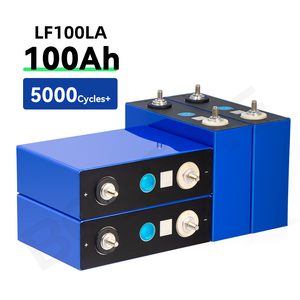
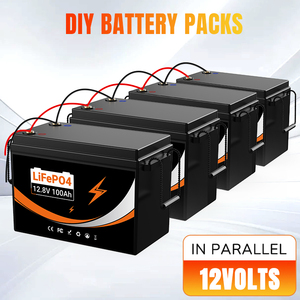
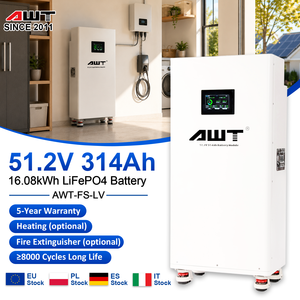
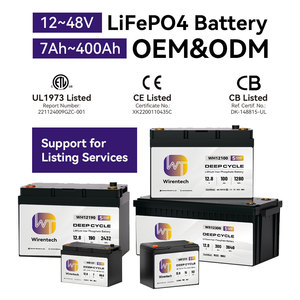
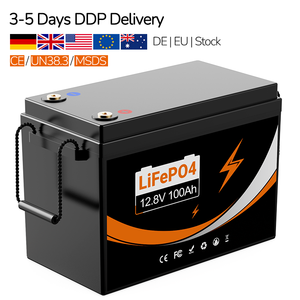
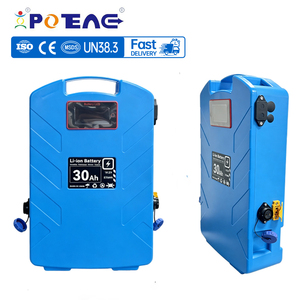
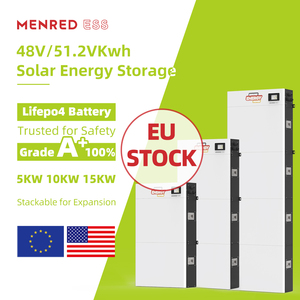
In the rapidly evolving industrial and commercial electrochemical storage landscape, modern enterprise procurement teams no longer view batteries merely as energy reservoirs. Today, battery architecture is engineered as a critical system element determining duty cycle uptime, total cost of ownership (TCO), operational safety, and thermal longevity. As a premier manufacturer of CE certified fast-charging lithium battery solutions, our facility integrates advanced prismatic Lithium Iron Phosphate (LiFePO4) and Lithium Nickel Manganese Cobalt Oxide (NMC) cells with active thermal balance management to satisfy the operational demands of high-rate discharge and rapid charge replenishment.
CE compliance for fast-charging systems demands adherence to rigorous European directives. This includes compliance with the Low Voltage Directive (LVD) 2014/35/EU, Electromagnetic Compatibility Directive (EMC) 2014/30/EU, and harmonized safety standard EN 62133-2 / IEC 62133-2 for secondary cells containing alkaline or other non-acid electrolytes. Furthermore, stationary energy storage systems must comply with IEC 62619, verifying thermal runaway propagation isolation under forced cell internal short circuits.
Selecting the correct electrochemical technology requires balancing volume constraints, weight targets, cycle life requirements, charge rate capabilities, and safety parameters. Below is an engineering comparison matrix designed for OEM purchasing teams evaluating custom fast-charging battery designs:
| Battery Chemistry | Nominal Cell Voltage | Energy Density (Wh/kg) | Cycle Life (80% DoD) | Standard Charge C-Rate | Fast Charge C-Rate | Thermal Runaway Temp |
|---|---|---|---|---|---|---|
| Lithium Iron Phosphate (LiFePO4) | 3.2 V | 160 - 185 Wh/kg | 4,000 - 8,000 Cycles | 0.5C | 1C - 3C Continuous | 270°C (Extremely Stable) |
| NMC (Nickel Manganese Cobalt) | 3.6 V - 3.7 V | 220 - 260 Wh/kg | 1,500 - 3,000 Cycles | 0.5C - 1C | 1.5C - 2C Peak | 210°C (Requires Active Cooling) |
| LTO (Lithium Titanate Oxide) | 2.3 V | 80 - 110 Wh/kg | 20,000+ Cycles | 2C - 5C | 10C Ultra-Fast | >300°C (Ultra-Safe) |
| Solid-State Hybrid (Next-Gen) | 3.8 V | 300 - 400 Wh/kg | 2,000+ Cycles | 1C | 2C - 4C Emerging | >250°C (Inherent Safety) |
As international clean energy transitions accelerate, B2B procurement strategies for energy storage and industrial mobile power are undergoing structural shifts. Buyers are shifting away from fragmented component sourcing toward vertically integrated manufacturing partners who offer turn-key custom power solutions. Key trends influencing global procurement over the next decade include:
The commercial energy storage system (ESS) market is transitioning rapidly from standard 280Ah prismatic cells to high-volumetric-density 300Ah and 314Ah cells. Maintaining the standardized 71173 footprint while achieving up to 12% higher energy density per containerized footprint, 314Ah LFP cell configurations reduce balance-of-plant (BOP) cost per kilowatt-hour, lower system wiring complexity, and simplify thermal management channels.
Supply chain disruptions have highlighted the vulnerability of long sea-freight lead times. Leading industrial buyers prioritize battery manufacturers offering local regional warehousing (such as EU stock in Germany and US West Coast fulfillment). Local stocking combined with DDP (Delivered Duty Paid) shipping protocols allows commercial projects to execute installation schedules without unexpected tariff burdens, customs clearing bottlenecks, or extended maritime transit delays.
With the implementation of the European Union’s New Battery Regulation (EU 2023/1542), manufacturers and importers must guarantee full supply chain traceability. Future-proof procurement requires battery packs equipped with digital "Battery Passports" tracking raw material provenance (lithium, cobalt, nickel), recycled content ratios, lifetime cycle telemetry, and manufacturing carbon footprints. Fast-charging batteries manufactured under clean hydro-electric or solar-powered production facilities gain a strategic procurement edge in Western markets.
Our senior electrochemical and mechanical design engineers can assist in drafting technical specifications, thermal simulation modeling, and custom BMS firmware configuration.
Get a QuoteR&D engineering teams are continuously advancing cell chemistry and pack packaging efficiency to overcome physical trade-offs between charging velocity, energy density, and thermal degradation:
Traditional graphite anodes face kinetic rate limitations during ultra-fast charging (rates exceeding 2C), increasing the risk of metallic lithium dendrite growth on the anode surface. By blending nano-silicon structures into graphite matrices, next-generation battery cells achieve a 20-30% increase in specific capacity while offering broader lithium-ion intercalation pathways, enabling 0 to 80% state-of-charge replenishment in under 18 minutes without lithium plating.
Conventional battery packs rely on individual cell module housings, interconnect wiring harnesses, and secondary structural trays, which consume up to 40% of internal pack volume. Advanced OEM manufacturing utilizes Cell-to-Pack (CTP) technology, eliminating modular plastic brackets and bonding prismatic cells directly to structural cooling plates using high-thermal-conductivity structural adhesives. This elevates volumetric packaging efficiency from 55% to over 75%, maximizing available capacity in compact mobile environments.
Future-proof fast-charging lithium batteries integrate machine-learning algorithms within the local BMS micro-controller or cloud gateway. By evaluating real-time electrochemical impedance spectroscopy (EIS), voltage relaxation curves, and micro-thermal variations, the intelligent BMS continuously adjusts charge current profiles in real time based on cell ambient temperature and state-of-health (SOH), effectively extending service life by up to 25%.
With over four decades of engineering heritage and manufacturing excellence, our organization maintains a specialized battery design, testing, and production infrastructure. Built on the principles of **Experience, Expertise, Authoritativeness, and Trustworthiness (E-E-A-T)**, our operational advantages include:
Talk directly with our application engineers to evaluate load profiles, space constraints, thermal targets, and budget parameters.
Get a Quote