Stay updated with expert perspectives, custom lithium battery technology guides, downhole power innovations, and regulatory updates from our engineering team.
Choosing the right Non-Rechargeable Lithium Batteries requires more than comparing prices or advertised capacity. Global buyers must match chemistry, voltage, discharge behavior, operating temperature, and shelf life with the equipment’s real demands. A medical monitor, smart meter, tracking device, and emergency beacon each require different performance priorities. Small details matter. A cold warehouse can expose weaknesses quickly.
This guide examines leading primary lithium battery types, including lithium thionyl chloride, lithium manganese dioxide, and lithium iron disulfide designs. It considers energy density, pulse capability, leakage resistance, storage stability, and supplier consistency. These factors influence field reliability and total ownership cost. Technical datasheets should support every important claim. Independent test reports are even better.
Experienced purchasing teams also review terminal design, packaging quality, batch traceability, and production controls. Samples should be evaluated under realistic loads, not only laboratory conditions. That step often reveals unexpected voltage drops or poor pulse response. No single battery wins every application. A cheaper cell may create replacement costs later. That is easy to overlook.
For international sourcing, buyers should request clear documentation, quality certifications, safety data, and transport compliance records. Specifications can vary between similar-looking products. Reliable suppliers explain those differences without hiding limitations. This article provides a practical framework for comparing products, asking better technical questions, and selecting dependable batteries for global applications. Some recommendations may still require field validation. That is the honest part.
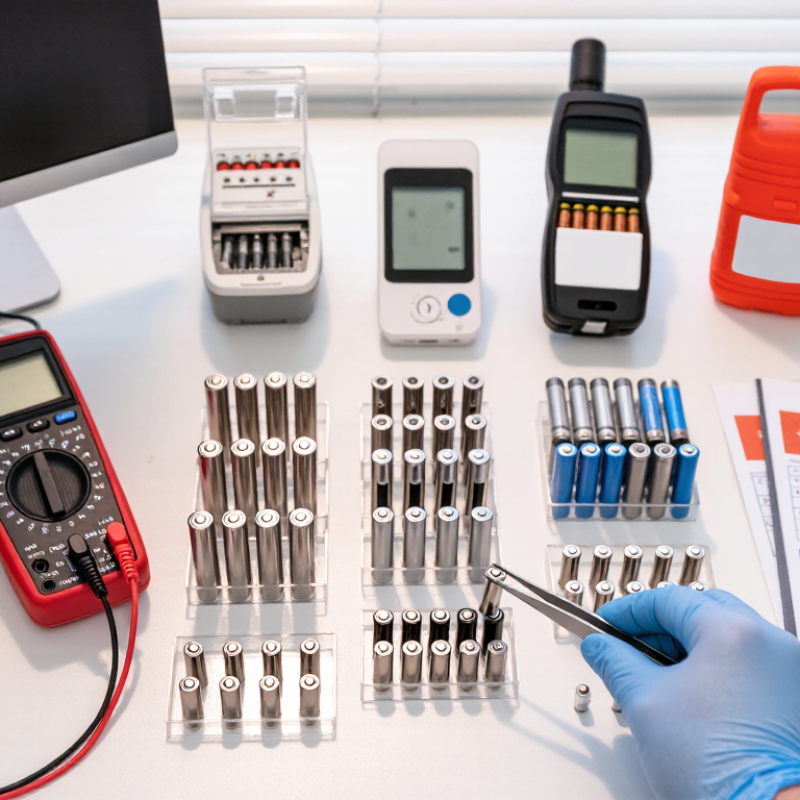
Non-rechargeable lithium batteries, often called primary lithium batteries, create electricity through a one-way chemical reaction. Their negative electrode contains lithium metal, while the positive electrode uses a lithium-compatible compound. An electrolyte carries lithium ions between the electrodes. A separator keeps the electrodes apart. It is a small barrier with a critical job.
When a device operates, lithium atoms release electrons at the negative electrode. The electrons travel through the external circuit and power the device. Lithium ions move internally through the electrolyte toward the positive electrode. This separation of paths produces usable electrical current. The reaction continues until the active materials are mostly consumed. Recharging is unsafe because the internal chemistry is not engineered for reliable reversal. Heat, gas, leakage, or rupture may result.
Different chemistries suit different tasks. Lithium manganese dioxide cells support cameras, sensors, and compact electronics. Lithium thionyl chloride cells provide long service in meters and remote monitoring equipment. Lithium iron disulfide cells can supply high current for household devices. In practical testing, temperature, pulse demand, and storage time strongly affect performance. A battery rated for ten years may deliver less in cold outdoor equipment. Datasheets help, but they are not perfect forecasts. Installation quality matters too. Keep terminals protected, prevent short circuits, and match the battery’s voltage and current requirements. A primary cell should never enter a charger, even if its size appears familiar.
Non-rechargeable lithium batteries serve different loads, temperatures, and service intervals. Grand View Research valued the global primary battery market at approximately USD 15 billion in 2023. Lithium cells remain a smaller, faster-growing segment. Selection should begin with current demand, not package size.
Lithium-manganese dioxide cells suit cameras, alarms, meters, and emergency equipment. They provide stable voltage and strong pulse output. Coin cells often power compact sensors and memory backup circuits. Lithium-iron disulfide cells fit AA and AAA devices requiring short bursts, such as flashes and handheld tools. They are lighter than alkaline options, but voltage compatibility must be checked carefully.
Lithium-thionyl chloride cells are better for remote meters, trackers, and industrial sensors. Their low self-discharge supports service lives approaching 10 to 20 years under suitable conditions. Avicenne Energy’s 2024 battery industry review highlights remote monitoring as a continuing growth area.
These cells dislike careless pulse demands. A capacitor or hybrid pulse device may be necessary. Lithium-carbon monofluoride cells offer high energy density for specialized medical, aerospace, and measurement equipment. IEC 60086 testing helps buyers compare standardized performance, while UN 38.3 compliance supports international transport.
Do not treat test data as field reality. Cold warehouses, weak contacts, and sudden radio transmissions can reduce performance. I would request discharge curves at the actual temperature and pulse profile before approving a large order. That extra check is easy to skip. It is also where many purchasing decisions become expensive.
Top Non Rechargeable Lithium Batteries for Global Buyers
Capacity should match the device’s real energy demand, not just the largest printed number. A cell rated at 3,000 mAh may perform poorly under high drain. Check the datasheet’s test current, temperature, and cutoff voltage. Voltage matters too. Nominal voltage describes normal operation, while terminal voltage can drop during heavy pulses. A camera, sensor, and medical monitor may require different discharge profiles. Small details matter.
Shelf life depends on chemistry, sealing quality, and storage conditions. Look for low annual self-discharge and a clearly stated expiry period. Cool, dry storage usually protects performance better than a hot warehouse. Rotate older stock carefully. I have learned that capacity claims are difficult to compare without identical test methods. This is often overlooked. Request batch information, safety data, and independent test reports from the supplier. Consistent labeling also supports traceability for international purchasing.
Safety deserves equal attention. Primary lithium batteries must never be recharged, modified, crushed, or mixed with incompatible cells. Inspect insulation, terminals, and packaging before installation. For equipment with sudden power demands, confirm pulse capability rather than relying on capacity alone. Keep cells away from metal objects during storage and transport. A higher voltage is not automatically better. I still allow a performance margin because real temperatures and aging rarely match laboratory conditions. That cautious choice can prevent unstable operation and unnecessary replacement.
Comparison of representative primary lithium battery chemistries by capacity, nominal voltage, shelf life, and relative safety profile.
| Battery Chemistry and Typical Format | Typical Capacity | Nominal Voltage | Typical Shelf Life | Relative Safety Score |
|---|---|---|---|---|
| Lithium-thionyl chloride, AA-size | 2,400 mAh | 3.6 V | 15 years | 3.5 / 5 |
| Lithium-iron disulfide, AA-size | 3,000 mAh | 1.5 V | 20 years | 4.0 / 5 |
| Lithium-manganese dioxide, CR123A-size | 1,500 mAh | 3.0 V | 10 years | 4.0 / 5 |
| Lithium-manganese dioxide, CR2032-size | 225 mAh | 3.0 V | 10 years | 4.0 / 5 |
Capacity varies with discharge current, temperature, cutoff voltage, and equipment load. Shelf-life figures are typical manufacturer-industry values for properly stored cells, while the safety score is a relative engineering comparison rather than a universal certification. Always check transport regulations, short-circuit protection, storage conditions, and the equipment’s voltage requirements before purchasing.
For global buyers, selecting a non-rechargeable lithium battery starts with the device’s actual load profile. Check nominal voltage, continuous current, pulse demand, and operating temperature. A battery that looks powerful on paper may fail during a cold radio transmission. In field evaluations, record voltage under load rather than trusting capacity alone. Capacity depends on discharge rate, cutoff voltage, and temperature.
Match the cell format to available space, terminal design, and insulation needs. Avoid forcing a standard size into a custom compartment.
Shelf life and storage conditions deserve equal attention. Ask for production dates, guaranteed capacity retention, and recommended humidity limits. Review the safety data sheet, technical datasheet, and independent test reports. Confirm compliance with applicable transport and product requirements in destination markets.
Documentation should identify the cell chemistry, test methods, traceability codes, and packaging configuration. If a supplier cannot explain a result clearly, pause the purchase. A low price is not useful when customs delays or field replacements erase the saving.
Request samples from the intended production batch, then test them with the real device, wiring, and software. Measure leakage, terminal strength, pulse performance, and voltage after storage. Compare at least two qualified sources, but do not select by figures alone.
Supplier response time and change-control discipline affect long projects. I have seen specifications look excellent while connector details were overlooked. That mistake was avoidable.
Build a written acceptance plan, including incoming inspection and end-of-life handling allowed by local rules. Keep assumptions visible; battery selection is often less tidy than a catalog suggests.
Top Non Rechargeable Lithium Batteries for Global Buyers
International shipping begins with classification, not price. Non-rechargeable lithium batteries must meet applicable transport rules, including UN 38.3 testing requirements. Confirm the battery’s lithium content, watt-hour rating, packaging instructions, and transport mode before booking freight. Air shipments often face stricter limits than sea shipments. Each carton should protect terminals from short circuits and show accurate handling marks. Damaged, swollen, or leaking cells should never enter a shipment.
Tips: Ask the supplier for test summaries, safety data sheets, and recent production records. Use original inner packaging when possible. Store batteries in a cool, dry, ventilated area, away from direct sunlight and metal objects. Keep cartons off concrete floors. Simple details matter.
Regulatory duties change by destination. Customs authorities may request product descriptions, importer information, certificates, or dangerous goods declarations. Carrier rules can also differ, even when national regulations appear similar. A trained freight forwarder should review the shipment before pickup. Do not rely on a copied label or an old compliance file. That shortcut can create delays, inspections, or rejected cargo. Temperature records and stock rotation improve storage control, although many buyers overlook them. A written process is useful, but it is not perfect; local rules and carrier policies still need checking before every international shipment.
They are primary batteries designed for one-way chemical reactions. They cannot be safely recharged.
Lithium atoms release electrons at the negative electrode. Electrons power the device through an external circuit.
Their internal chemistry is not designed for reliable reversal. Charging may cause heat, gas, leakage, or rupture.
Lithium-manganese dioxide cells suit cameras, alarms, meters, and emergency equipment. They offer stable voltage and strong pulse output.
Lithium-iron disulfide cells suit devices needing short bursts, such as flashes and handheld tools. Check voltage compatibility carefully.
They suit remote meters, trackers, and industrial sensors. Their low self-discharge supports long service intervals.
Check current demand, voltage, temperature, pulse load, storage time, and contact quality. Package size alone can mislead.
Cold conditions may reduce available output, even when the battery has a long rated life. Test conditions matter.
Protect the terminals and prevent short circuits. Install the battery with correct polarity.
Request discharge curves at the actual temperature and pulse profile. Standard test data is useful, but not perfect.
Non-Rechargeable Lithium Batteries are primary power sources designed for single use, offering reliable energy through a controlled chemical reaction without recharging. Common types include lithium coin cells for compact electronics, lithium cylindrical cells for cameras and portable devices, and lithium-thionyl chloride cells for industrial equipment and remote monitoring systems. Choosing the right battery requires comparing capacity, voltage stability, operating temperature, shelf life, size, weight, and built-in safety features. Buyers should also consider the device’s power demands, expected service life, installation environment, and total cost rather than focusing only on initial price.
For global buyers, dependable sourcing involves checking product specifications, quality documentation, packaging standards, and supplier consistency. International shipping and storage require attention to protective packaging, temperature and humidity control, terminal insulation, and proper handling procedures. Importers should verify current transport classifications, labeling requirements, customs documentation, recycling obligations, and destination-market regulations before placing an order. Careful evaluation helps ensure safe delivery, predictable performance, and suitability for different commercial and industrial applications.