Stay updated with expert perspectives, custom lithium battery technology guides, downhole power innovations, and regulatory updates from our engineering team.
Medical Device Battery Packs are essential to the safe, continuous operation of portable healthcare equipment. They power infusion pumps, patient monitors, surgical tools, ventilators, and wearable diagnostic devices. A weak battery can interrupt treatment, delay mobility, or create unnecessary clinical pressure. Reliability matters.
This guide examines leading medical device battery pack manufacturers worldwide and the capabilities that separate dependable suppliers from ordinary vendors. It considers lithium-ion, lithium-polymer, nickel-metal hydride, and primary battery solutions. Each chemistry has practical strengths and limitations. There is no universal winner.
The evaluation focuses on engineering experience, production quality, safety testing, and long-term support. Important indicators include cell selection, battery management systems, thermal protection, enclosure design, charging performance, and cycle-life data. Manufacturers should also demonstrate controlled processes aligned with medical quality systems, such as ISO 13485, where applicable. Transport and safety documentation, including relevant UN 38.3 testing, deserves careful review.
Real-world performance often depends on details that brochures overlook. A battery may fit perfectly but fail under cold storage conditions. Another may deliver strong capacity but require expensive charging hardware. These trade-offs need honest assessment.
The following overview compares international suppliers by customization ability, manufacturing scale, certifications, responsiveness, and application knowledge. It also considers after-sales support, traceability, and product continuity. Rankings can be imperfect. Supplier capabilities change, and published information may not reveal every manufacturing constraint.
Therefore, medical device developers should verify technical claims, request test evidence, and conduct application-specific validation before selecting a partner. A reliable manufacturer is more than a component vendor. It becomes part of the device’s safety strategy. That relationship requires evidence, communication, and careful review.
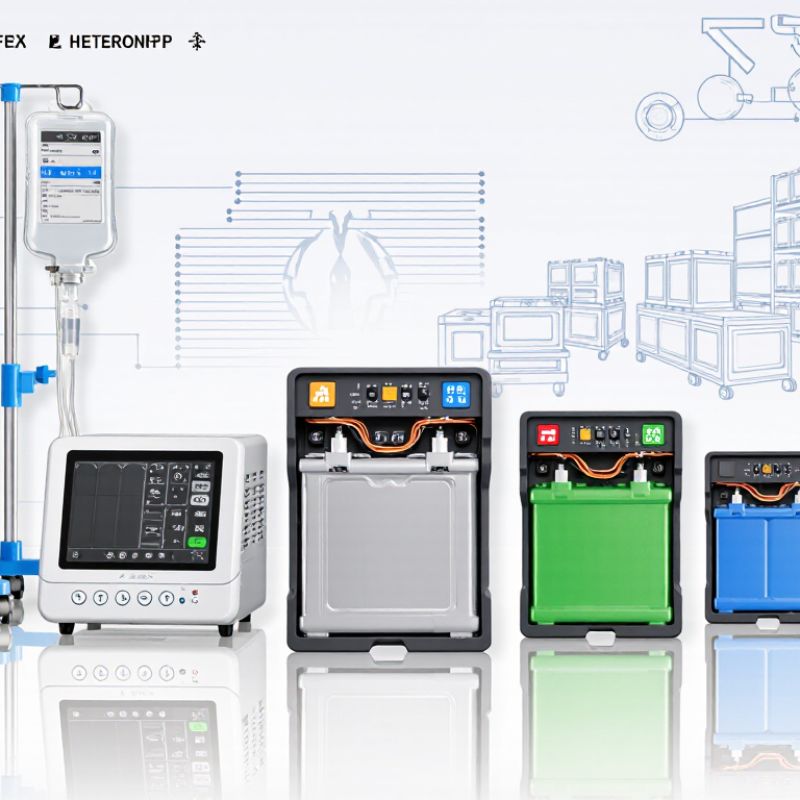
The medical device battery pack industry supports portable monitors, infusion systems, surgical tools, and home-care equipment. Manufacturers usually combine lithium-based cells, protection circuits, battery management systems, and custom housings. Each pack must match the device’s voltage, current, charging method, and available space. A few millimeters can affect enclosure fit.
Experienced manufacturers begin with application testing, not only catalogue specifications. They study discharge patterns, heat generation, charging cycles, and standby periods. Engineers may test a pack inside a device during simulated transport and repeated clinical use. Protection against overcharge, short circuits, overheating, and deep discharge is essential. Traceable materials and documented production records also support quality investigations.
Regulatory expectations vary by market, so manufacturers build verification plans around the device’s intended use. Testing may include vibration, drop resistance, temperature changes, electrical safety, and transport conditions. Medical battery production often requires controlled assembly areas and inspection at several stages. Cell matching matters. Small differences can become noticeable after many cycles. No production line is flawless. A connector may pass an early check yet fail after repeated bending. That is why reliable suppliers keep corrective-action records and review field feedback. Cost pressure remains real, but reducing inspection can create expensive delays later. The industry is also exploring safer chemistries, higher energy density, and better recycling practices. Progress is uneven, and some promising designs still need longer service data.
| Industry Dimension | Verified Industry Data or Typical Range | Medical Device Relevance | Key Reference or Technical Basis |
|---|---|---|---|
| Primary Battery Chemistries | Lithium-ion, lithium iron phosphate, nickel-metal hydride, lithium primary, and sealed lead-acid are commonly considered for medical applications. | Chemistry selection affects energy density, safety, rechargeability, operating temperature, service life, and transportation requirements. | Battery chemistry specifications and device-level risk assessments. |
| Typical Cell-Level Energy Density | Lithium-ion: approximately 150–250 Wh/kg; lithium iron phosphate: approximately 90–160 Wh/kg; nickel-metal hydride: approximately 60–120 Wh/kg; sealed lead-acid: approximately 30–50 Wh/kg. | Higher energy density can reduce pack size and weight, while lower-density chemistries may provide advantages in cost, thermal stability, or established supply chains. | Indicative electrochemical industry ranges; actual pack-level values are lower because of housing, electronics, wiring, and protection components. |
| Rechargeable Battery Pack Voltage | Common nominal configurations include approximately 3.6–3.7 V per lithium-ion cell, 3.2 V per lithium iron phosphate cell, 1.2 V per nickel-metal hydride cell, and 2 V per lead-acid cell. | Series and parallel configurations are selected to match device voltage, power demand, charging architecture, and runtime requirements. | Nominal voltage conventions used in rechargeable battery design. |
| Typical Rechargeable Cycle Life | Approximately 300–1,000 full-equivalent cycles for many lithium-ion designs; lithium iron phosphate designs can commonly reach approximately 1,000–3,000 cycles under suitable operating conditions. | Cycle life influences preventive replacement schedules, total ownership cost, device availability, and maintenance planning. | Actual results depend on depth of discharge, temperature, charging rate, storage conditions, and battery-management settings. |
| Battery Management System Functions | Protection functions typically include overcharge, over-discharge, overcurrent, short-circuit, overtemperature, undervoltage, cell balancing, state-of-charge estimation, and fault logging. | These functions support safe operation, predictable runtime, battery diagnostics, and integration with the host medical device. | Battery-management architecture and device risk-control requirements. |
| Common Medical Device Applications | Patient monitors, portable ventilators, infusion pumps, defibrillators, ultrasound equipment, surgical systems, mobility devices, emergency equipment, and home-care devices. | Each application requires a different balance of peak power, continuous power, runtime, portability, recharge speed, and backup capability. | Application-specific electrical, mechanical, clinical, and risk-management specifications. |
| Portable Device Runtime | Typical design targets range from several hours for high-power portable equipment to more than 24 hours for low-power monitoring or home-care devices. | Runtime must be validated under realistic load profiles, including startup surges, alarms, wireless communication, and display use. | Runtime is calculated from usable watt-hours and measured device load, not from nominal battery capacity alone. |
| Operating Temperature | Many rechargeable battery packs are designed for approximately 0°C to 45°C during charging and approximately −20°C to 60°C during discharge, subject to the selected cells and pack design. | Temperature limits affect charging permission, available capacity, safety controls, storage procedures, and clinical deployment conditions. | Cell manufacturer limits and validated pack-level thermal testing. |
| Medical Quality-System Expectation | Suppliers serving regulated medical-device programs commonly operate under a documented quality-management system aligned with ISO 13485 requirements or the applicable local regulatory framework. | Quality systems support design controls, traceability, supplier management, nonconformance handling, corrective action, and change control. | ISO 13485:2016, Quality management systems for medical devices. |
| Electrical and Functional Safety | Battery packs are evaluated as part of the medical electrical system for electrical safety, abnormal operation, mechanical protection, leakage, insulation, and risk controls. | The pack must be compatible with the host device charger, power path, alarms, isolation design, and essential-performance requirements. | IEC 60601-1 and applicable collateral or particular standards. |
| Rechargeable Battery Safety Testing | Portable rechargeable lithium battery packs commonly require evaluation for electrical, mechanical, environmental, and abuse conditions appropriate to the intended application. | Testing helps control risks associated with short circuits, crush, vibration, impact, overcharge, forced discharge, and thermal events. | IEC 62133-2 for portable sealed secondary lithium cells and batteries. |
| Air and Ground Transportation | Lithium battery cells and packs shipped internationally generally require UN 38.3 transport testing and compliance with applicable dangerous-goods rules. | Transport classification, watt-hour rating, packaging, labeling, documentation, and state-of-charge rules can affect global distribution. | UN Manual of Tests and Criteria, Part III, Sub-section 38.3, plus applicable IATA and local regulations. |
| Customization Requirements | Common customization areas include dimensions, connector selection, cell arrangement, communication protocol, fuel-gauge calibration, mounting, enclosure materials, and charging profile. | Custom designs improve mechanical fit and system performance but require additional verification, validation, documentation, and change management. | Device-specific design inputs, risk analysis, verification, and validation plans. |
| Supply-Chain Evaluation Criteria | Key criteria include cell traceability, manufacturing capacity, component availability, second-source planning, production testing, field-support capability, regulatory documentation, and continuity planning. | A resilient supply chain reduces redesign risk, product interruptions, obsolescence exposure, and regional delivery delays. | Supplier qualification, quality agreements, business-continuity plans, and lifecycle-management procedures. |
| Global Manufacturing Footprint | Medical battery-pack production is supported by established electronics and battery-manufacturing ecosystems across Asia-Pacific, Europe, North America, and other industrial regions. | Regional production and service coverage can influence lead time, regulatory support, logistics cost, technical communication, and after-sales response. | Assessment should be based on verified production sites, regulatory scope, capacity, and customer-support locations rather than geographic claims alone. |
Note: Technical ranges are indicative industry reference values. Final battery-pack specifications must be confirmed through cell selection, pack-level testing, host-device validation, applicable medical-device regulations, and transportation requirements.
They build rechargeable packs for monitors, infusion systems, surgical tools, and home-care equipment. Each pack combines cells, protection circuits, battery management, and a fitted housing.
Engineers check voltage, current, charging method, discharge patterns, and available space. A few millimeters can affect enclosure fit. Fit matters.
They should test heat, charging cycles, standby periods, vibration, drops, and temperature changes. Testing inside the actual device gives more realistic results than catalogue data alone.
Packs need protection against overcharging, deep discharge, excessive current, short circuits, and abnormal heat. A battery management system helps, but software can fail. Extra safeguards are wiser.
Matched cells support stable performance across repeated cycles. Traceable materials and inspection records help identify problems quickly. Small differences may become noticeable later.
Buyers should review audits, failure-rate data, corrective actions, and change-control procedures. A certificate alone proves little. Field feedback matters.
Transport testing should cover vibration, impact, temperature changes, and shipment conditions. Packaging must protect the pack from damage and accidental electrical contact.
Lower inspection costs may create expensive delays, replacements, or device failures later. No production line is flawless. Cost pressure is real, but shortcuts deserve careful review.
The industry is developing safer chemistries, higher energy density, and improved recycling methods. Progress remains uneven. Some designs still lack long service data.
The global medical device battery pack industry supports a wide range of equipment, including portable monitoring systems, diagnostic instruments, surgical devices, and emergency care technology. Medical Device Battery Packs are designed with advanced lithium-based chemistries, intelligent battery management systems, thermal controls, protection circuits, and reliable charging solutions to deliver stable performance, long service life, and dependable operation in demanding healthcare environments. Manufacturers also focus on compact design, energy density, secure enclosure construction, and communication features that help medical devices monitor battery health accurately.
Leading manufacturing hubs are located across North America, Europe, and Asia, where suppliers combine engineering expertise, testing facilities, and established production capabilities. Quality and safety requirements are central to the industry, requiring strict validation, traceability, electrical testing, risk management, and compliance with applicable medical-device and battery regulations. When evaluating suppliers, organizations should consider technical experience, customization capabilities, production consistency, quality systems, documentation, after-sales support, and the supplier’s ability to provide reliable products throughout the device lifecycle.