Stay updated with expert perspectives, custom lithium battery technology guides, downhole power innovations, and regulatory updates from our engineering team.
Choosing China’s top LWD Drilling Batteries suppliers requires more than comparing unit prices. These batteries support logging while drilling tools in demanding underground environments. They face vibration, pressure changes, heat, shock, and long operating cycles. A reliable supplier should understand these conditions through documented engineering experience. Ask how the battery performs during actual drilling campaigns, not only in laboratory demonstrations.
Look closely at cell quality, battery chemistry, energy density, discharge stability, and protection design. The supplier should explain its battery management system clearly. Request test records for capacity, insulation, thermal behavior, vibration resistance, and storage life. Traceable production records matter. So does consistent quality between different batches. Certifications can support credibility, but they should match the product and application. A certificate alone proves little.
Ask practical questions. Can the supplier customize dimensions, connectors, voltage, or communication interfaces? How quickly can it provide samples? Does it offer technical support after delivery? A serious manufacturer should discuss packaging, transport conditions, replacement procedures, and field troubleshooting. It should also state realistic lead times.
Low prices attract attention.
However, the cheapest option may create hidden costs. Early capacity loss can delay drilling work and complicate tool maintenance. No checklist is perfect. Supplier claims still need independent verification and field feedback. Request references from comparable drilling projects, then compare performance under similar temperature and load conditions. This article explores how buyers can evaluate China-based suppliers with evidence, technical judgment, and careful risk control. Reliable selection is not about finding a perfect battery. It is about finding a supplier whose promises remain believable underground.
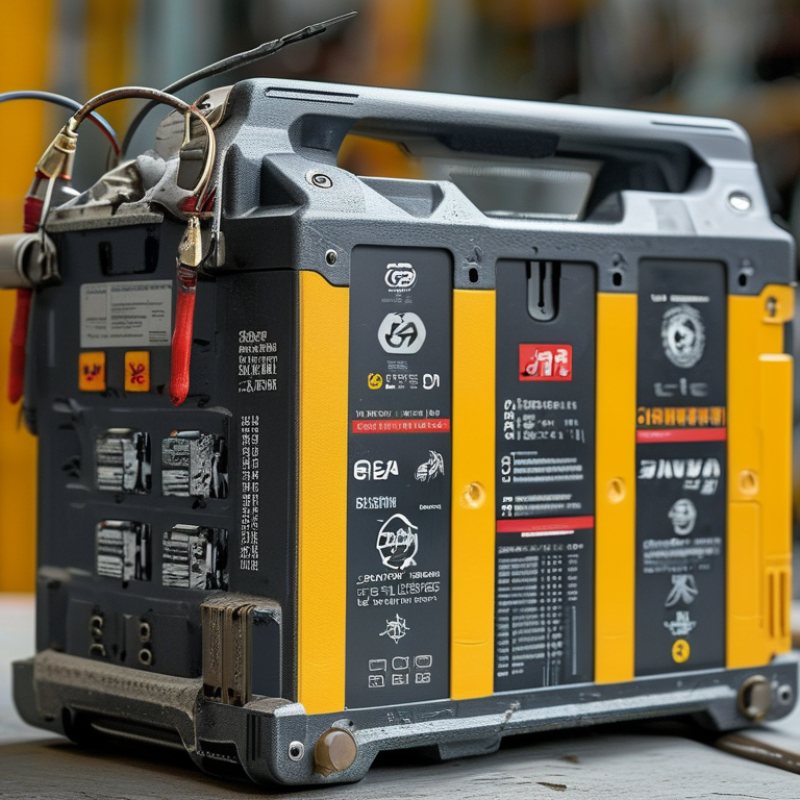
LWD drilling batteries power measurement tools while they operate deep inside the well. LWD means logging while drilling. These batteries support sensors, memory, processors, and downhole telemetry systems. Unlike surface batteries, they face heat, vibration, pressure, shock, and limited maintenance access.
In field operations, stable power helps capture gamma, inclination, azimuth, resistivity, and formation data. A weak battery may reduce measurement quality or interrupt transmission during a critical drilling interval. Battery capacity must match tool demand, temperature exposure, operating time, and storage conditions. Chemistry matters too. Some applications need high energy density, while others require predictable discharge under extreme heat.
Supplier selection should begin with verified performance records, test reports, and traceable production data. Ask for discharge curves at realistic temperatures, not only laboratory room conditions. Check dimensional accuracy and connector compatibility before ordering. Packaging also deserves attention, especially during long-distance transport and site storage. Technical support should include clear safety procedures and failure analysis. No selection is perfect. A battery can meet its specifications yet perform poorly when the drilling schedule changes. I have seen planning assumptions become the weakest part of a battery program. Careful field feedback and independent testing can expose that gap before deployment.
China Top LWD Drilling Batteries Suppliers: How to Choose?
LWD battery suppliers should be judged by measured performance, not catalogue capacity. Published SPE and IADC technical papers commonly place downhole battery temperatures between 125°C and 175°C. Some high-temperature qualification tests also apply shock levels above 1,000 g. Ask for test conditions, not only headline figures.
Key Performance Standards for Evaluating LWD Battery Suppliers
Check usable energy at temperature, pulse-current stability, internal resistance, and discharge consistency. A battery rated at 200 Ah at room temperature may deliver far less energy downhole. IEC 60086 test methods provide useful references for primary-cell capacity and discharge testing. API and ISO quality systems also help verify production control and traceability. Request batch records, accelerated-aging results, and certificates from independent laboratories.
Field experience shows that connector fit, insulation quality, and storage history can decide a run. Small details matter. Suppliers should report shelf life, leakage controls, pressure tolerance, and safe transport procedures. SPE/IADC case data frequently links unstable power with interrupted telemetry and shorter measurement windows, although battery failure is not always the only cause. I would also compare three consecutive production batches, rather than trusting one successful sample. This takes longer. It is still wiser. A practical supplier must explain failed tests openly and provide corrective evidence, not polished promises.
This neutral screening model uses measurable LWD battery criteria and suggested evaluation weights. Verify each supplier’s claims through qualification tests, traceability records, and applicable standards such as IEC 60086 and UN 38.3.
How to use the chart: Prioritize safety and high-temperature performance, then compare pulse-power capability, energy density, storage stability, manufacturing quality, and technical documentation.
Choosing among China’s top LWD drilling battery suppliers starts with category, not price. The market generally includes primary lithium cell makers, rechargeable battery pack manufacturers, and engineering integrators. Primary lithium-thionyl chloride units suit long shelf life and stable pulse support. Rechargeable lithium-ion packs fit repeated runs when charging controls and thermal management are proven. Integrators combine cells, heaters, protection circuits, connectors, and pressure-resistant housings for specific tools.
For high-temperature wells, ask for tested operating curves, not a headline temperature. Request discharge data at actual pulse loads, vibration results, pressure exposure, and capacity after storage. A reliable supplier should provide cell traceability, lot records, safety documents, and a clear screening process. It should also explain how batteries are assembled, sealed, and inspected before shipment. Small details matter. A loose connector can waste an expensive run.
Compare suppliers by technical category and supporting evidence. Cell manufacturers may offer stronger chemistry control, while pack specialists often handle tool integration better. Custom engineering suppliers can adjust voltage, dimensions, and telemetry interfaces, but their validation depth may differ. Ask for sample testing under a simulated downhole profile. Do not accept room-temperature capacity as field performance. Buyers often compare ampere-hours alone, and that can mislead. Review pulse current, temperature limits, storage life, failure reporting, and service response together. The best choice matches the well’s documented conditions, not the largest specification sheet.
Choosing China’s top LWD drilling battery suppliers requires more than comparing prices. Field performance matters.
On a hot pad, a battery may face vibration, pressure cycling, and temperatures above 150°C.
Check independent test records against IEC 60079-11 and relevant API procedures. Ask for discharge curves at actual downhole temperatures, not room temperature. Review capacity retention after storage, shock testing, and repeated pressure cycles.
BloombergNEF’s 2023 Battery Price Survey reported an average lithium-ion pack price of 139 dollars per kWh, down 14% year on year. This is only a market reference, not proof of downhole quality.
Do not guess.
Safety evidence should include short-circuit protection, venting behavior, insulation resistance, and hazardous-area documentation. The IEC standard focuses on limiting ignition risks, but certification alone cannot predict every field failure. Request failure analysis reports and batch traceability.
ISO 14224:2016 also supports consistent equipment failure and maintenance data collection, which helps compare suppliers fairly.
Reliability needs field evidence.
Ask for run-hour records, retrieval rates, and failure data from comparable wells. One successful test proves little. A supplier reporting zero failures may be hiding weak records, or simply serving a small sample. That point deserves scrutiny.
Compare at least three batches and inspect cells, welds, connectors, and seals before shipment. Field engineers should review the evidence, not only procurement teams.
The IEA’s Oil 2024 report projects global oil demand to reach 105.4 million barrels per day by 2029. More complex wells will increase pressure on reliable measurement-while-drilling power systems. Supplier selection should begin with the well, not a catalogue. Define temperature, vibration, shock, pressure, run time, and chemical exposure. A battery rated for 150°C may fail when the actual tool reaches 165°C. Check the margin.
Request verifiable evidence. Ask for discharge curves at expected temperatures, pulse-current performance, shelf-life data, and completed quality records. SPE technical literature frequently evaluates downhole batteries at 150°C and 175°C, showing why room-temperature figures are weak evidence. Review cell chemistry, electrical protection, sealing methods, and batch traceability. Confirm whether testing covers the complete battery assembly, not only individual cells. This detail is often missed.
Then audit the supplier’s production process. Examine calibration records, incoming-material controls, leak testing, and final inspection photos. Request samples from different production batches. Compare actual capacity, voltage stability, and connector fit in a controlled test. The OPEC World Oil Outlook 2024 forecasts oil demand above 113 million barrels per day through 2045, so supply continuity matters. Still, a large factory does not automatically mean better field performance. Ask for response times, replacement procedures, and technical support during rig operations. My practical caution is simple: never accept an impressive datasheet without raw test results.
: Compare usable energy, pulse-current stability, internal resistance, discharge consistency, and field reliability. Catalogue capacity is only a starting point. Ask for measured results at operating temperature.
Heat can reduce available energy significantly. A battery rated at 200 Ah may deliver much less downhole. Request discharge curves at 150°C, 165°C, or the planned operating temperature. Do not guess.
Tests should reflect temperature, vibration, shock, pressure cycling, runtime, and chemical exposure. Some downhole conditions exceed 150°C. Shock may exceed 1,000 g. Your actual well matters more than a catalogue rating.
Request short-circuit protection, insulation resistance, venting behavior, pressure tolerance, and leakage-control records. Review hazardous-area documents and recognized safety-standard test reports. Certification helps, but it cannot predict every field failure.
Compare samples from at least three consecutive production batches. Inspect cells, welds, seals, insulation, and connectors. Review calibration records, incoming-material checks, leak tests, and final inspections. One good sample proves little.
Ask for run-hour records, retrieval rates, failure data, and interrupted-operation reports from comparable wells. Check whether unstable power affected telemetry or shortened measurement windows. Zero reported failures deserves careful questioning.
Very important. A poorly fitted connector can interrupt power despite good cell performance. Inspect connector fit, insulation, sealing, and resistance to vibration and pressure changes. Small details matter.
The supplier should explain failed tests openly and provide corrective evidence. Ask about replacement procedures, response times, storage history, and technical support during operations. Polished promises are not enough. I would still verify everything.
LWD Drilling Batteries are essential power sources for logging-while-drilling tools, supporting real-time formation evaluation, measurement accuracy, and reliable data transmission in demanding underground environments. A suitable battery supplier should demonstrate consistent energy output, high temperature and pressure resistance, stable discharge performance, long service life, and compatibility with specific drilling instruments. Safety design, quality control, traceable materials, and compliance with recognized industry requirements are also important factors when evaluating potential suppliers in China.
China’s LWD drilling battery suppliers may include specialized battery manufacturers, energy technology companies, and suppliers offering customized power solutions. To compare them effectively, buyers should review technical specifications, testing procedures, production capacity, quality certifications, field performance, delivery reliability, and after-sales support. A practical selection process begins by defining operating conditions and tool requirements, followed by supplier qualification, sample testing, technical communication, cost analysis, and small-scale field validation. Choosing a supplier based on total reliability rather than price alone can help reduce operational risks and support consistent drilling performance.