Stay updated with expert perspectives, custom lithium battery technology guides, downhole power innovations, and regulatory updates from our engineering team.
Choosing Extreme Condition Battery Packs requires more than comparing capacity, voltage, and price. A reliable pack must perform when heat, freezing air, water, vibration, dust, or sudden load changes challenge every component. The right decision begins with the operating environment, not the product brochure.
Dr. Jeff Dahn, a leading battery researcher, has said, “The battery is the most important component in an electric vehicle, and the one that has the greatest potential for improvement.” His observation also applies to industrial and mobile power systems. A battery pack used on a winter worksite may need heaters, insulation, and low-temperature charging protection. A pack installed near an engine may require thermal barriers, airflow management, and carefully positioned sensors. Small details matter.
Look closely at the enclosure rating, cell chemistry, battery management system, charging limits, and service records. Ask how the pack was tested. Was it exposed to repeated temperature changes, vibration, moisture, and partial charging? Evidence is stronger than impressive specifications. Certifications and documented test procedures also improve confidence, although they do not guarantee perfect field performance.
Experience can reveal problems that laboratory sheets miss. A connector may loosen after months of vibration. A cold battery may show acceptable voltage but deliver disappointing power. That gap matters. No checklist is perfect. Buyers should also consider maintenance access, replacement parts, warranty terms, and emergency isolation procedures. The best Extreme Condition Battery Packs are not simply powerful. They are predictable, protected, and matched to the real conditions they must survive.
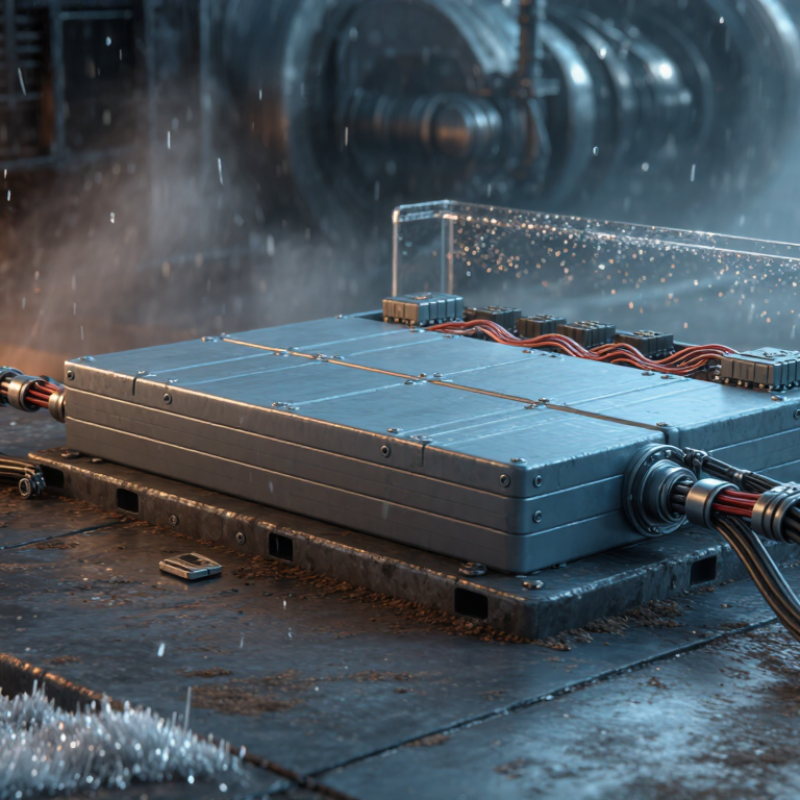
How to Choose Extreme Condition Battery Packs?
Define the Extreme Conditions Your Battery Pack Must Withstand
Start with measurable conditions, not vague labels like “rugged” or “all-weather.” Record the lowest and highest operating temperatures, storage temperature, humidity, altitude, vibration, dust, water exposure, and charging limits. The U.S. Department of Energy reports that cold weather can reduce electric vehicle range by about 40%. Low temperatures also slow charging and increase internal resistance. Your pack may survive the cold, yet perform poorly.
Heat requires equal attention. High temperatures accelerate cell aging and can damage seals, sensors, and insulation. IEC 60529 explains IP protection levels, but IP67 does not mean permanent underwater operation. It indicates temporary immersion under defined laboratory conditions. IEC 60068 testing also separates temperature cycling, vibration, shock, and humidity. These tests should match the real installation. A mining vehicle faces different stress than a coastal monitoring unit. Do not copy a standard test blindly. That shortcut often creates false confidence.
Tips: Build a condition matrix before selecting cells. Add safety margins beyond the expected range. Test the complete pack, including connectors and software. Check performance during charging, not only discharge. Ask for raw test data, cycle counts, and failure criteria. A polished report can still hide weak assumptions. Recheck them.
Typical operating discharge-temperature limits for common rechargeable battery chemistries. Use these ranges as an initial screening guide, then verify the cell, enclosure, thermal-management system, and protection circuit against the final application requirements.
Extreme-condition selection should also consider charging temperature, storage temperature, water and dust ingress, vibration, shock, altitude, and thermal runaway protection. The temperature values shown are typical industry ranges and can vary by cell design and manufacturer specification.
Choosing an extreme-condition battery pack starts with the environment, not the device. Temperature changes chemistry, internal resistance, and usable capacity. At sub-zero temperatures, many rechargeable cells deliver less power and recover slowly. A chemistry designed for cold operation may perform better, but insulation and controlled heating can still be necessary. In high heat, aging accelerates. Keep the pack away from continuous hotspots whenever possible.
Moisture creates another risk. Condensation can corrode terminals, damage insulation, and produce unstable electrical paths. Use sealed housing, suitable gaskets, and pressure-equalizing protection where needed. Yet sealing a pack completely may trap heat. That trade-off is easy to underestimate. Pressure also matters in aircraft, mountain equipment, and underwater systems. Reduced pressure can affect heat transfer, while external pressure may stress the enclosure. Test the complete pack, not only individual cells.
Tips: Define the lowest and highest operating temperatures first. Check capacity at real load levels, not only laboratory ratings. Add temperature, voltage, and pressure monitoring when failure would be costly. Run repeated moisture and thermal-cycle tests. One test is not enough. Field conditions are usually messier than expected. Allow safety margins for aging, wiring loss, and imperfect installation. A pack that works perfectly on the bench may still disappoint after vibration, condensation, and rapid temperature changes.
Choosing an extreme-condition battery pack starts with measured capacity, not the label. A pack rated at 100 Ah may deliver much less power in freezing weather. The U.S. Department of Energy reports that low temperatures increase internal resistance and reduce usable energy. AAA testing found an average 41% driving-range loss at 20°F (-6.7°C). Plan for this gap.
Power output needs separate testing. Check continuous watts, peak watts, and the pack’s discharge rate. A heater, pump, or radio may start with a short surge. That surge can trigger protection circuits. Runtime depends on real load, temperature, cable loss, and aging. Use this estimate: runtime equals usable watt-hours divided by average watts. Keep a safety margin. Field measurements often disagree with laboratory figures. That is frustrating, but useful.
Tips: Test the pack inside a cold chamber or insulated field case. Record voltage every 15 minutes. Compare results at 77°F, 32°F, and below 0°F. The International Electrotechnical Commission’s IEC 61960-3 standard provides useful capacity-test guidance. For hot environments, add ventilation and monitor cell temperature. Heat accelerates degradation, even when output looks normal. A 20% reserve is sensible, though it may be insufficient for long missions. Recheck it after six months.
Representative engineering ranges for selecting a battery pack when temperature, moisture, vibration, or high loads can affect performance.
| Operating Profile | Recommended Chemistry | Nominal Pack Size | Nominal Energy | Estimated Usable Energy | Continuous Output | Peak Output | Estimated Runtime at Continuous Load | Operating Conditions | Selection Considerations |
|---|---|---|---|---|---|---|---|---|---|
| Cold Outdoor Equipment | Lithium-ion with a low-temperature charging control system | 24 V, 40 Ah | 960 Wh | Approximately 720 Wh at −20°C | 500 W | 1,000 W for up to 10 seconds | Approximately 1.4 hours | −20°C to 45°C discharge; charging may require battery warming below 0°C | Cold temperatures reduce available capacity and increase internal resistance. Verify heater power and cold-start requirements. |
| High-Heat Industrial Equipment | High-temperature-rated lithium-ion or lithium iron phosphate | 48 V, 20 Ah | 960 Wh | Approximately 720 Wh at 55°C | 800 W | 1,600 W for up to 10 seconds | Approximately 0.9 hours | 0°C to 55°C discharge; charging temperature must follow cell specifications | Continuous operation above the rated temperature accelerates aging. Use thermal monitoring and allow ventilation. |
| High-Load Mobile Machinery | Lithium iron phosphate for high cycle stability | 48 V, 60 Ah | 2,880 Wh | Approximately 2,300 Wh at 25°C | 2,000 W | 4,000 W for up to 10 seconds | Approximately 1.1 hours | −20°C to 50°C discharge with a suitable battery management system | Choose a pack whose continuous current rating exceeds the real load. Check motor-start and hydraulic surge currents separately. |
| Long-Runtime Remote Monitoring | Lithium iron phosphate | 12.8 V, 100 Ah | 1,280 Wh | Approximately 1,020 Wh at 25°C | 300 W | 600 W for up to 10 seconds | Approximately 3.4 hours | −20°C to 50°C discharge; lower loads can provide substantially longer runtime | For low-power systems, calculate standby consumption, sensor duty cycle, communications load, and cold-weather derating. |
| Wet, Dusty, and Outdoor Installations | Lithium-ion or lithium iron phosphate in a sealed enclosure | 24 V, 60 Ah | 1,440 Wh | Approximately 1,150 Wh at 25°C | 1,000 W | 2,000 W for up to 10 seconds | Approximately 1.2 hours | −20°C to 50°C; enclosure should be selected for the required ingress protection level | Confirm sealing, connector protection, condensation control, cable-gland compatibility, and pressure-equalization requirements. |
| Frequent Deep-Cycle Operation | Lithium iron phosphate | 48 V, 40 Ah | 1,920 Wh | Approximately 1,540 Wh at 25°C | 1,200 W | 2,400 W for up to 10 seconds | Approximately 1.3 hours | −20°C to 50°C discharge; charging below 0°C may require temperature protection | Suitable for applications prioritizing cycle life. Actual service life depends on depth of discharge, temperature, current, and charging practice. |
| Calculation basis: Nominal energy = voltage × ampere-hours. Estimated usable energy assumes approximately 80% depth of discharge and includes an indicative environmental derating. Runtime = usable energy ÷ continuous load. Actual results vary with inverter efficiency, battery age, load changes, wiring losses, temperature, and battery-management-system limits. | |||||||||
Choosing an extreme-condition battery pack begins with protection, not capacity. In field evaluations, heat, freezing air, dust, and vibration expose weak designs quickly. A battery management system should monitor every cell, not only the pack voltage. It should stop charging during overvoltage, excessive current, and dangerous temperatures. Short-circuit protection matters too. Response must be fast enough to prevent damaged wiring from becoming a larger failure. Safety comes first.
For cold environments, require low-temperature charging control. Charging frozen cells can cause permanent damage. A temperature sensor near the cells is more useful than one near the connector. In hot conditions, thermal cutback should reduce stress before shutdown becomes necessary. That balance is easy to overlook. An insulated enclosure may retain heat, while ventilation can admit moisture. The right choice depends on duty cycle, airflow, and storage conditions. There is no perfect enclosure.
Look for a sealed, impact-resistant case with suitable ingress protection, strain relief, and a replaceable fuse. Vibration testing should include connectors, busbars, and mounting points. Cell matching and production traceability support consistent performance across repeated cycles. Independent testing or documented test data strengthens confidence, but paperwork alone proves little. Ask for results from thermal, drop, vibration, and short-circuit tests. I would also inspect service access. A pack that cannot be safely diagnosed may become expensive waste. Some designs still prioritize compact size over repairability. That tradeoff deserves a second look before deployment.
Choosing an extreme-condition battery pack requires more than checking capacity and peak power. Ask for documented testing under heat, cold, vibration, humidity, dust, and repeated charging cycles. The test report should identify methods, sample quantities, failure limits, and laboratory qualifications. A certificate alone is not enough. Read the small print.
Match the testing conditions to the real workplace. A battery used on a frozen construction site needs low-temperature discharge data, not only room-temperature results. Packs mounted on vehicles should show vibration and impact testing. Check enclosure protection, connector sealing, thermal monitoring, and controlled shutdown behavior. These details often decide whether equipment starts reliably at 6 a.m. or fails beside a muddy road.
Maintenance affects the total ownership cost more than the purchase price. Confirm inspection intervals, storage requirements, service access, and replacement procedures. Ask how performance is measured after hundreds of cycles. A pack that needs specialist service may cost more than expected. Include downtime, spare units, transport, training, and end-of-life handling in the calculation. I would also question optimistic cycle-life claims, because real loads rarely match laboratory patterns. Perfect projections can hide practical weaknesses. A simple cost sheet, updated with field data, gives a more honest comparison.
Temperature, moisture, pressure, vibration, and wiring losses can change real performance. A device may work indoors but disappoint outdoors.
Freezing temperatures increase internal resistance and reduce usable energy. A pack rated at 100 amp-hours may deliver much less.
Test the pack at 77°F, 32°F, and below 0°F. Record voltage every 15 minutes. Use insulation or controlled heating when necessary.
Measure continuous power, peak power, discharge rate, and runtime. A pump or heater may need a short starting surge.
Divide usable watt-hours by average watts. Include cable losses, cold temperatures, aging, and a safety margin.
Continuous heat accelerates aging, even when output appears normal. Keep the pack away from hot surfaces and monitor cell temperature.
Condensation can corrode terminals, damage insulation, and create unstable electrical paths. Sealed housing and suitable gaskets reduce exposure.
Yes. A sealed enclosure may trap heat. Pressure-equalizing protection can help, but the full enclosure still needs thermal testing.
Reduced pressure changes heat transfer, while external pressure can stress the enclosure. Test the complete pack, not individual cells alone.
A 20% reserve is sensible, but it may not cover long missions. Recheck performance after six months. Real conditions are untidy.
Choosing Extreme Condition Battery Packs requires more than comparing voltage and capacity. Start by defining the environments the pack must withstand, including extreme heat or cold, moisture, dust, vibration, impact, altitude, and pressure changes. Then select a battery chemistry and design suited to these conditions, while evaluating usable capacity, power output, charging performance, and expected runtime under real operating loads. Environmental factors can significantly affect battery performance, so laboratory ratings should be considered alongside practical field requirements.
Safety and durability are equally important. Look for protective features such as thermal management, sealed housings, short-circuit protection, overcharge control, and resistance to shock or corrosion. Confirm that the battery pack has undergone relevant testing and that its maintenance, inspection, storage, and replacement requirements are manageable. Finally, assess total ownership cost, including installation, monitoring, servicing, downtime, and disposal. A reliable choice balances performance, protection, lifespan, compliance, and long-term value.